
Why KPIs Should Matter to a CISO: Measuring and Improving Cybersecurity

As a Chief Information Security Officer (CISO), your role is not just about implementing, maintaining, monitoring, and continuously improving your cybersecurity program. It’s also about proving its effectiveness and justifying investments. With cyberthreats evolving daily, security leaders must establish measurable, data-driven approaches. Key Performance Indicators (KPIs) play a crucial role in this, as they provide a clear roadmap for your cybersecurity program and empower you to make informed decisions and confidently justify your investments. Why KPIs Matter for a CISO By providing a clear roadmap for your cybersecurity program, KPIs empower you, as a CISO, to make informed decisions and confidently justify your investments. Effective KPIs allow you to: Quantify Security Performance: Show stakeholders how security initiatives reduce risk, minimize the potential financial impact on the organization and increase productivity in a secure and cost-effective manner. Justify Budget Requests: Provide data-backed justifications for security solutions and personnel investments. Enhance Decision-Making: KPIs are not just numbers on a page. They are tools that can be used to identify and reduce risk, assess incident response times, manage compliance, and refine cybersecurity strategies. By providing a clear roadmap for your cybersecurity program, KPIs empower you to make informed decisions and confidently justify your investments. Align with Business Goals: KPIs are not just about measuring cybersecurity performance. They also play a crucial role in ensuring that security initiatives support organizational objectives by streamlining processes and improving functionality. This alignment with business goals is key to demonstrating the value of your cybersecurity program to the wider organization. Essential KPIs for a CISO To drive meaningful cybersecurity investments and continuous improvements, CISOs should track the following KPIs: 1. Mean Time to Detect (MTTD) & Mean Time to Resolve (MTTR) Why it matters: The speed at which your team detects and responds to incidents directly influences the damage caused by cyber threats. Reducing the “blast radius” is key to ensuring minimal impact on the organization. How to measure: Track the time from the first indication of an incident to detection (MTTD) and from detection to resolution (MTTR). Incident response should include the following: identification and analysis, containment, eradication, recovery (resolution), and lessons learned. 2. Phishing Susceptibility Rate Why it matters: Phishing remains a primary attack vector, and understanding how often employees fall for phishing attempts highlights the effectiveness of training. How to measure: Monitor the percentage of employees who click on simulated phishing emails, open links, or enter credentials (phish-prone) versus those who report them. 3. Patch Management Compliance Why it matters: Unpatched vulnerabilities are a leading cause of breaches. Ensuring timely patching reduces exposure. It is critical to prioritize based on vulnerabilities that are critical, high, exploitable, have exploits available, and are currently being exploited in the wild, then work from there. How to measure: Track the percentage of critical, high, and medium patches applied within the required timeframe. Showing a percentage decrease for each severity level per month/quarter shows progress in the right direction. 4. Number of Security Incidents Why it matters: A high number of security incidents may indicate gaps in defense mechanisms. Example: A link that was clicked enabling an adversary to drop information-stealing malware or a keylogger onto an endpoint. How to measure: Categorize incidents by severity and track trends over time. Add a distinction between contained and eradicated incidents and incidents that led to a breach of confidentiality, integrity, and availability. 5. Security Awareness Training Completion Rates Why it matters: Human error is a major security risk. Ensuring employees complete training programs helps mitigate threats. How to measure: Track participation rates and post-training assessments. 6. Third-Party Risk Assessment Scores Why it matters: Vendor security weaknesses can lead to data breaches. Measuring third-party cybersecurity risk helps mitigate supply chain threats. How to measure: Use standardized security questionnaires and risk assessments for vendors. Review penetration testing results, SOC 2 or ISO 27001/27005 reports. 7. Compliance Audit Pass Rate Why it matters: Regulatory fines and reputational damage can result from non-compliance. How to measure: Track the percentage of passed security audits versus failed ones. Making KPIs Actionable Remember, KPIs are not just numbers on a page. They are tools for driving continuous improvement in your cybersecurity program. As a CISO, you can make the most of them by: Align KPIs with Business Risk: Focus on metrics directly impacting business operations. Organizational leadership is concerned with resiliency and profitability, so tailor the KPIs to what matters most to the report’s recipients. Automate Data Collection – Use security tools and SIEM systems to automate reporting. If you don’t have a tool that provides output, including all metrics, consider creating a spreadsheet with a dynamic dashboard. Regularly Review and Adapt – Cyber threats evolve, and your KPIs should, too. KPIs are not static. I update my dashboard monthly in preparation for the quarterly board of directors presentation. Report to Leadership in Business Terms – Translate security metrics into financial and operational impacts. It is critical to present the KPIs adapted to the audience who will be receiving them. You don’t want to talk about CVEs with a CEO or board member. Craft the message in a way that reflects profit and loss. Final Thoughts In today’s rapidly evolving threat landscape, the effectiveness of CISOs is judged not only by their ability to prevent attacks, maintain compliance, or reduce organizational risk but also by how well they measure, communicate, and improve security performance. KPIs, by their proactive nature, provide the foundation for this, ensuring that cybersecurity isn’t just a reactive function but a strategic pillar of business resilience. By leveraging the right KPIs, CISOs cannot only build stronger defenses but also secure executive buy-in and drive long-term security success. AccessIT Group employs vCISOs and other thought leaders with decades of experience leading strategic cybersecurity initiatives in all industry verticals. If you struggle with producing effective KPIs or delivering the proper message to stakeholders, reach out for a free one-hour consultation or engage with our team for a longer-term partnership to ensure your success in identifying, documenting, and
Navigating the New PCI DSS SAQ-A Updates: What Merchants Need to Know
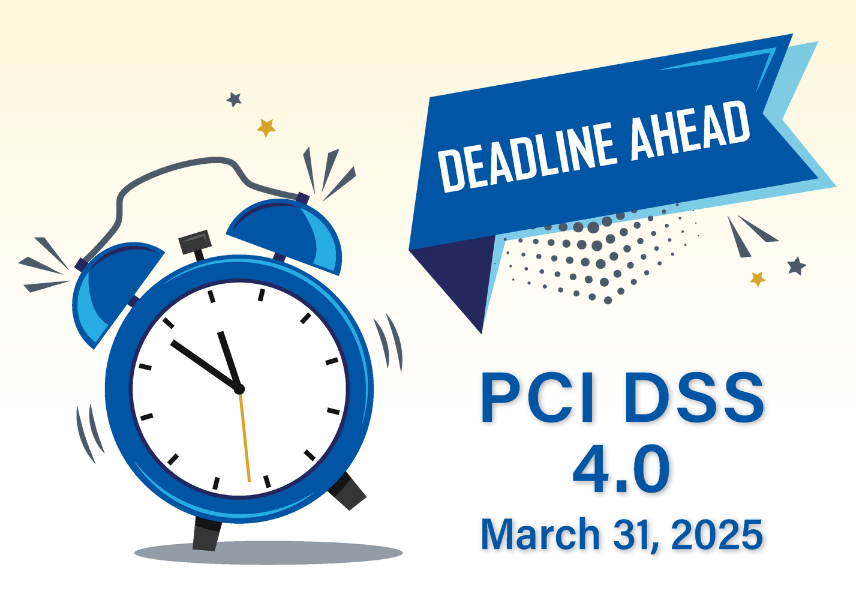
The Payment Card Industry Security Standards Council (PCI SSC) has introduced significant updates to the Self-Assessment Questionnaire A (SAQ-A), effective March 31, 2025. These updates significantly change merchant eligibility requirements and compliance obligations, particularly for e-commerce businesses that outsource cardholder data processing. While the removal of two specific compliance requirements, 6.4.3 and 11.6.1, might initially appear to simplify the compliance process, a closer examination reveals a more complex reality. The updates shift the focus from explicit controls to broader, high-standard obligations, raising the bar for merchants seeking to qualify for SAQ-A. This blog post delves into the key changes to SAQ-A, their implications for merchants, service providers, and Qualified Security Assessors (QSAs), and actionable steps stakeholders can take to navigate this evolving compliance landscape. Understanding the Changes to SAQ-A The updated SAQ-A introduces two major changes: specific compliance requirements (6.4.3 and 11.6.1) are removed, and new eligibility criteria are added. Let’s examine these changes in more detail. 1. Removal of Requirements 6.4.3 and 11.6.1 Previously, SAQ-A merchants needed to comply with the following requirements: Requirement 6.4.3: Mandated the inventory, justification, and control of all scripts on payment pages, ensuring that each script was authorized and its integrity assured. Requirement 11.6.1: Merchants must monitor payment pages for unauthorized modifications, including changes, additions, and deletions to scripts or security-impacting HTTP headers. These controls were designed to protect against malicious script-based attacks, such as eSkimming or Magecart, which target e-commerce systems to compromise sensitive data. However, with the latest SAQ-A update, these requirements are no longer explicitly mandated for SAQ-A merchants. This does not mean that the underlying security objectives have been abandoned. 2. New Eligibility Criteria While removing 6.4.3 and 11.6.1 might seem like a relaxation of obligations, introducing a new eligibility criterion significantly raises the compliance threshold. To qualify for SAQ-A, merchants must now confirm that their entire e-commerce site—not just the payment page—is secure and not susceptible to attacks from malicious scripts. This includes: Protection against first-party, third-party, and external scripts that could compromise e-commerce systems. Comprehensive security measures to prevent vulnerabilities across the entire website beyond the scope of the payment page. This shift in focus creates a circular compliance challenge: even though 6.4.3 and 11.6.1 are no longer required, the new eligibility requirement effectively necessitates adherence to the principles of these controls. Merchants must still implement robust protections, such as script monitoring and integrity checks, to secure their e-commerce environments and maintain compliance. Guidance and Clarifications On February 28, 2025, the PCI SSC released FAQ 1588, further clarifying the updated SAQ-A requirements. Key takeaways include: 1. Scope: The new eligibility criteria apply only to merchant sites hosting embedded payment forms (e.g., iFrames). Redirects or links to payment pages are excluded. Third-party scripts unrelated to payment processing and incapable of compromising account data security are not considered third-party service providers. 2. Eligibility Options: Implementing requirements 6.4.3 and 11.6.1 remains sufficient to meet the new eligibility criteria. Alternative solutions, such as penetration testing, web application firewalls (WAFs), or processor attestations, may also fulfill the criteria, subject to QSA discretion. Provided merchants adhere to implementation guidelines, payment processors can provide written confirmation that their iFrame solutions include necessary protection against script-based attacks. What Hasn’t Changed? Despite the updates to SAQ-A, several key elements remain unchanged: 1. Compliance Deadlines: The deadline for compliance with PCI DSS v4.0.1, including the requirements for 6.4.3 and 11.6.1, remains March 31, 2025, for all merchants not eligible for SAQ-A. 2. Requirements for Service Providers: Service providers must still comply with 6.4.3 and 11.6.1, ensuring comprehensive script inventory, monitoring, and security of payment flows. 3. Security Expectations for SAQ-A Merchants: While the compliance process may appear streamlined, SAQ-A merchants are still expected to implement robust protections against vulnerabilities, particularly those related to script-based attacks. Implications for Stakeholders The changes to SAQ-A have far-reaching implications for merchants, service providers, and QSAs. Here’s what each group needs to know: 1. For SAQ-A Merchants The new eligibility criteria are likely to pose significant challenges for merchants: Eligibility Hurdles: To qualify for SAQ-A, merchants must now secure their entire e-commerce site against script-based attacks. This requires implementing robust script controls and monitoring solutions, even though 6.4.3 and 11.6.1 are no longer explicitly required. Expanded Compliance Obligations: Merchants who cannot meet the new eligibility criteria will need to complete other, more comprehensive Self-Assessment Questionnaires (SAQs), such as SAQ A-EP. This represents a significant compliance uplift, as SAQ A-EP includes 151 requirements compared to the 19 in SAQ-A. 2. For Service Providers Service providers play a crucial role in helping merchants navigate these changes: Educating Merchants: Small merchants must be educated about the importance of script controls and the implications of the new eligibility criteria. Misinterpreting the updates as a relaxation of obligations could leave merchants vulnerable to attacks. Offering Solutions: Service providers can generate additional revenue by offering value-added services that simplify compliance for merchants while enhancing their security posture. For example, solutions that monitor and secure scripts can help merchants meet the new eligibility criteria. 3. For QSAs Qualified Security Assessors must adapt their approach to reflect the new SAQ-A requirements: Clarifying Misconceptions: QSAs must emphasize that removing 6.4.3 and 11.6.1 does not reduce security obligations. Under the new eligibility criteria, the expectation to secure e-commerce environments remains unchanged. Providing Guidance: QSAs should recommend proven tools and solutions, such as Content Security Policies (CSP) and Subresource Integrity (SRI), or third-party platforms, such as Human Security, Source Defense’s platform, or Jscrambler, to help merchants secure their websites and achieve compliance. Addressing the Compliance Challenge Merchants facing the new SAQ-A eligibility criteria have several options to ensure compliance: 1. Conduct Web Application Testing Merchants can take a proactive approach by conducting web application assessments to demonstrate that their e-commerce site is not susceptible to malicious script-based attacks. This approach empowers merchants to provide the evidence needed to satisfy the new eligibility requirements, giving them a sense of control over their compliance. 2. Implement 6.4.3 and 11.6.1 Across the Entire Site Although these
AccessIT Group Joins Google Cloud Partner Advantage, Expanding Cloud Services Portfolio
KING OF PRUSSIA, Pa. (Sep. 19, 2024) – AccessIT Group, a provider of specialized cybersecurity solutions, is excited to announce it has joined Google Cloud Partner Advantage as a partner-level partner for the Sell Engagement Model. This milestone underscores the company’s dedication to offering leading-edge cloud solutions. By joining Google Cloud Partner Advantage, AccessIT Group can now seamlessly offer authorized cloud products from a variety of partners on Google Cloud Marketplace, empowering clients with access to secure, end-to-end cloud solutions. This collaboration enhances the company’s ability to deliver robust, tailored cybersecurity services that address the evolving needs of businesses in today’s digital landscape. “We are excited about the opportunities this new relationship with Google Cloud brings to our customers,” said Robert Reilly, Vice President of Sales at AccessIT Group. “By broadening our cloud services portfolio and joining Google Cloud Partner Advantage, we are better positioned to provide our clients with the most effective and innovative cloud security solutions available today.” AccessIT Group’s collaboration with Google Cloud is a strategic addition to its growing cloud services portfolio. In addition to its relationship with Google Cloud, AccessIT Group is a registered seller on both AWS and Microsoft Marketplaces, allowing the company to offer a comprehensive multi-cloud approach. This flexibility enables AccessIT Group to support diverse cloud environments, ensuring clients receive complete support for their unique infrastructure needs. ### About AccessIT Group AccessIT Group is a specialized cybersecurity solutions provider offering a full range of advanced security services that assist organizations with the design, implementation and operation of their security program and infrastructure. We focus on cloud, risk management, compliance and implementation services, working with organizations to address the evolving complexities of cyberthreats. With seven locations in metropolitan areas along the East Coast and Midwest and over 20 years of experience and relationships with leading technology partners, we help you find the most appropriate technologies for implementation in your environment. Our cybersecurity experts operate as an extension to your team and help you identify the technologies and practices needed to protect your organization and your client data. Learn more at www.accessitgroup.com.